Lizzy Freed is our Global Scholar in the Netherlands for her first year of Master's study in community Economic growth through agriculture. She will be applying for a second year's study this spring. She is from Suttons Bay and the TC club has sponsored her.
Hi all,
Happy Spring (at least here)! I hope the weather is getting nice for you all as well.
I wanted to give a quick update of our progress on the garden. We have had a lot of successes in the past month! First of all, we were granted funding for all material costs, and Rotary Wageningen has generously agreed to cover the cost of transplants and seeds. Next week, I will be meeting with another community funds organization to request more financial support in order to solidify our budget for the first 3 years of the project.
I’ve been meeting with the refugees in the Bosrandweg center, and there is a lot of enthusiasm for the project. Although there will still be a lot of turnover as residents go through the emigration process, there was a recent policy change and now they will be spending up to 60 weeks in the center - it used to be 6-8, so it’s incredibly sad for the refugees. However, on the plus side, we will have more consistency in the garden. That begin said, the center has begun an initiative within the community to try to find productive volunteer opportunities for the refugees as they spend this enormous amount of time in limbo, and the garden is one option that they are heavily advertising.
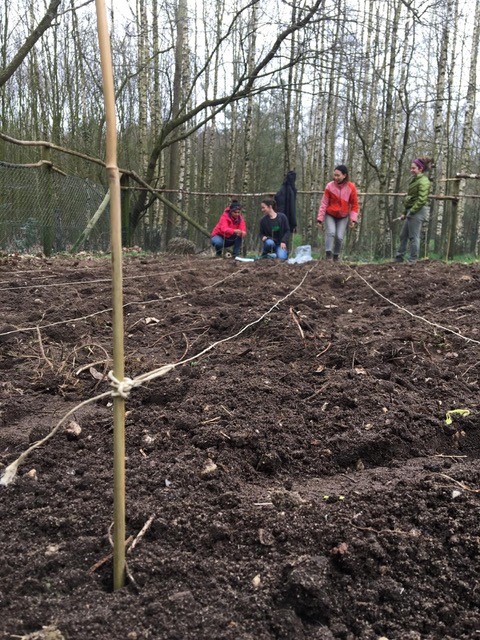
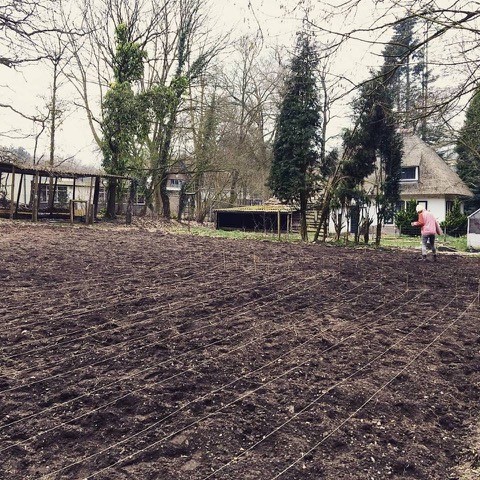
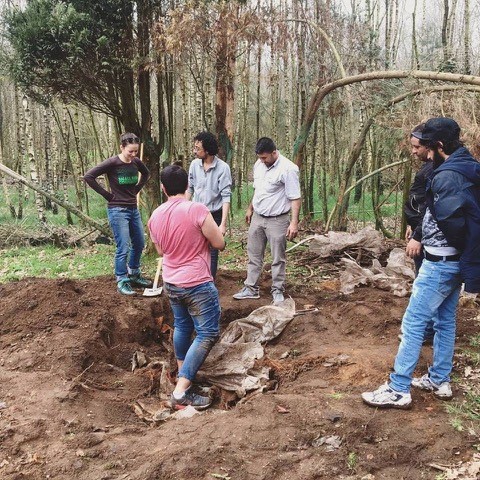
We had our first work day last weekend, and successfully prepared the space (which was a big job - we have to level the entire field after the tractor ploughed!) and planted our first round of vegetables (onion, carrots, lettuce, and snap peas). I will attach some photos. The idea is that we will have a main group of 10-15 gardeners that will be responsible for finishing a weekly task chart. This chart will be hung at the garden (laminated) and will have English, Arabic, and visual aids to describe the tasks. The group will be responsible for delegating who will complete these tasks, including other residents who want to participate in a more flexible way. Additionally, when we have larger work days (i.e. large planting days or harvests), in which the main group will help to coordinate with other residents to find additional help. Then, there will be three tiers of main food distribution:
1) The main group; this group will consist of 10-15 people, which will encourage sustainability of the project because there will always be a person present with prior knowledge to help as people circulate through. They will be the first to receive and harvest any fresh produce. They will be allowed on a weekly basis to harvest a to-be-determined amount of food (this amount will change depending on the season, as well as whatever the group decides they think is fair - we will not decide this upfront).
2) The “flexible” gardeners; these will be the other residents who want to work in the garden on occasion, but do not want to commit to the weekly schedule of the main group. They will work in the garden on tasks that are delegated by the main group, and will receive a to-be-determined amount of fresh produce for their time (again, will depend on input from the main group and the season).
3) The remaining residents will get food when there is a surplus at harvest.
We also hope to host community dinners, distribute surplus food via local markets, and host trainings in collaboration with the university. But, first we have to successfully grow these vegetables!
I look forward to sharing some more photos soon, hopefully with flourishing plants in the background!
Thanks for your support, and I hope you are all doing well.
Kind regards,
Lizzy